Everything your bank needs to offer digital assets to your customers.
Our solution covers all processes, from APT tests and KYC reliance to order management and settlement. We are integrated with 2 leading German institutions: Hyphe (liquidity provider) and Tangany (Custodial) to enable the highest regulatory compliance and security standards.
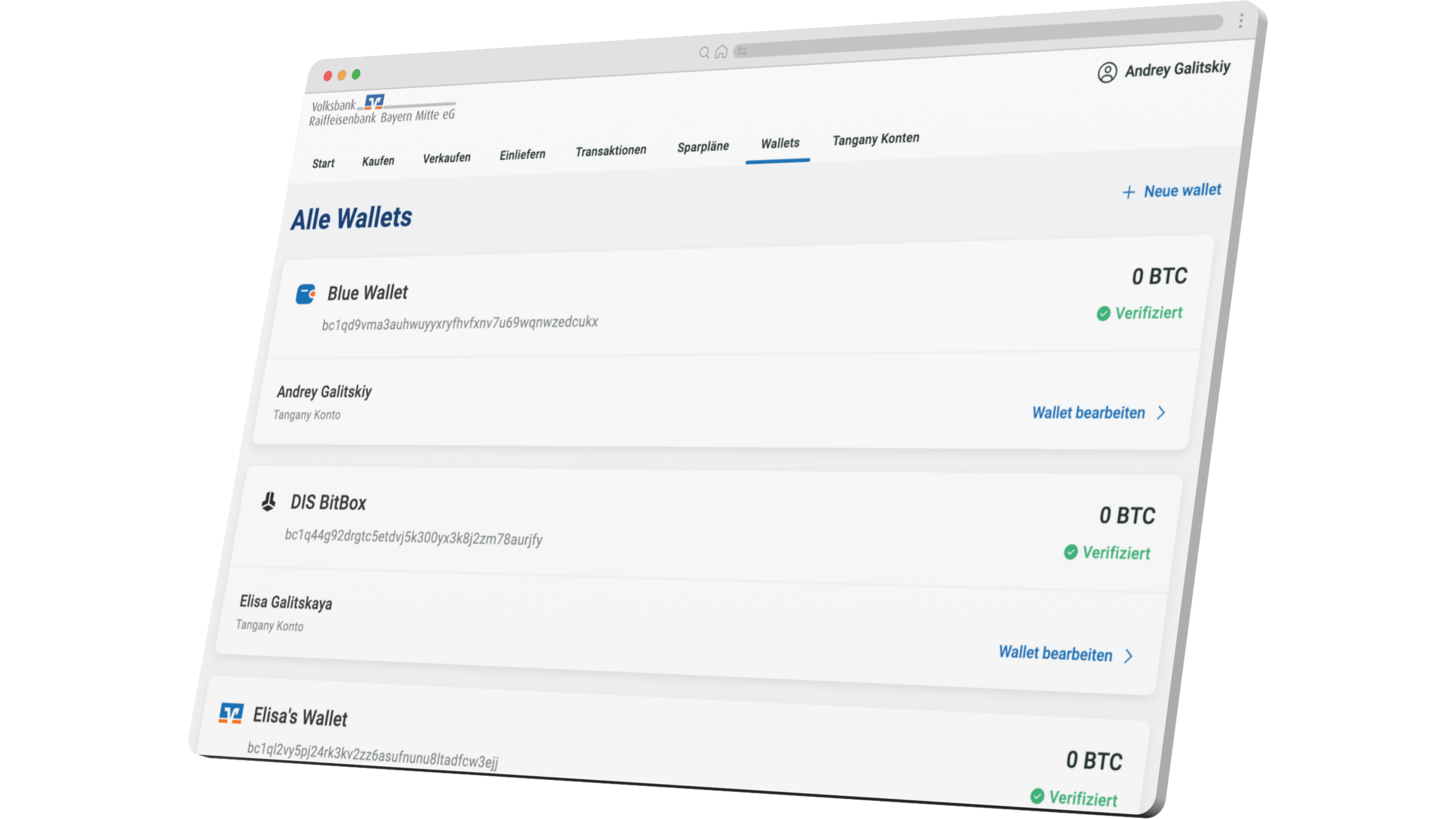
Whitelabel portal
The portal, tailored to the look and feel of the bank, provides your clients with a familiar-looking application to buy, sell, deposit, and withdraw cryptocurrencies. It covers the complete user journey, starting with single sign-on, appropriateness test to buying and selling digital assets and managing saving plans, self-hosted wallets, and custodial account.
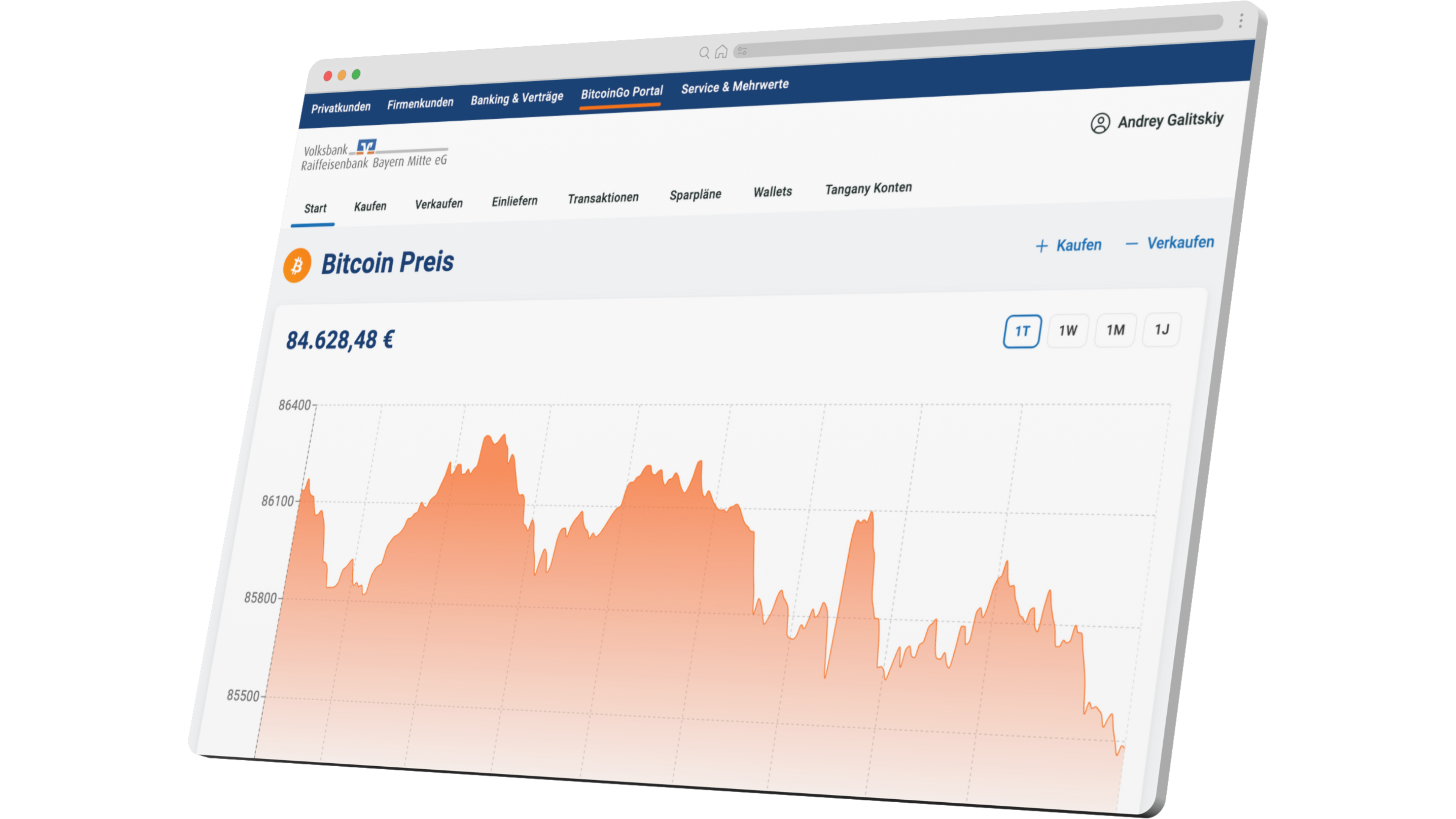
Login / Single sign-on
With our solution, your clients will not have to register or remember a new password. What's even more important is that they will always enter their username and PIN/password in online banking. And the best part: it works with standard API and does not require changes on the bank's side.
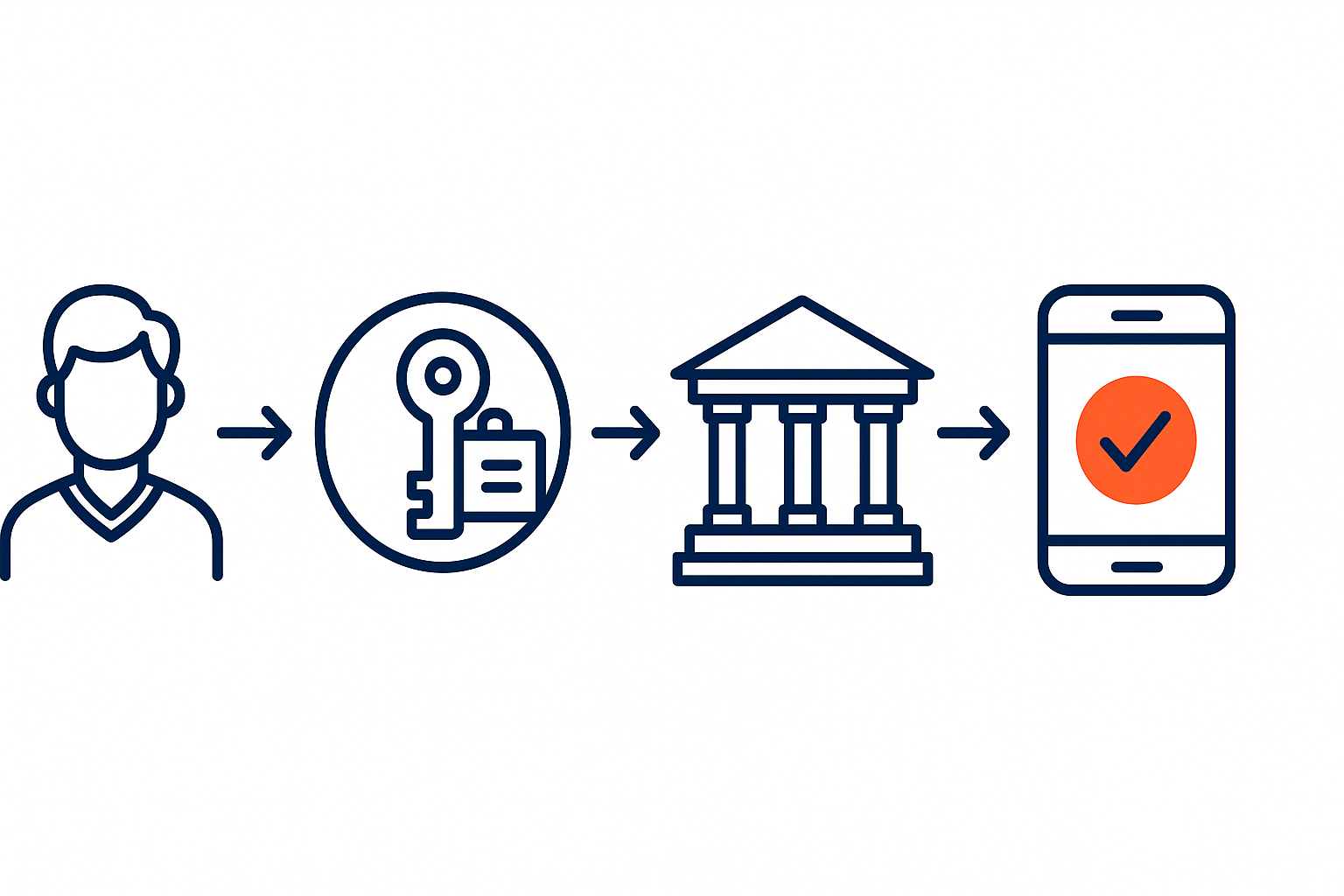
Onboarding and KYC reliance
In some cases, it is required to pass on customer data to the custodian. Without getting into too much detail here, it depends on your MiCA set-up. With the interface mentioned above it is possible to fully onboard your clients, passing all data required to the custodian.
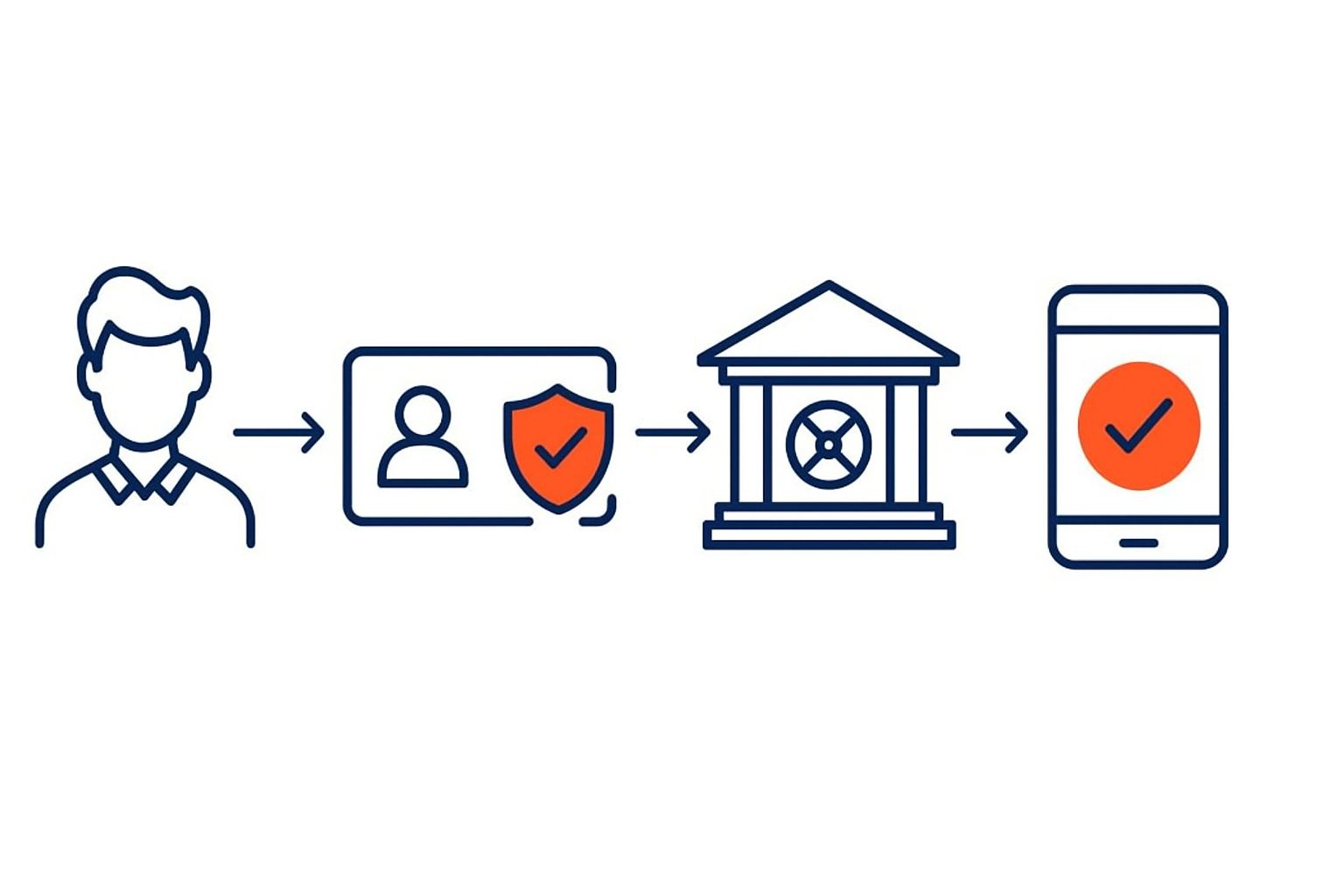
Appropriateness Tests
Each new asset class requires the institution to check if it is appropriate for the specific client. When your customer logs in to the white-label portal for the first time, they need to pass a simple, but comprehensive test before trading.
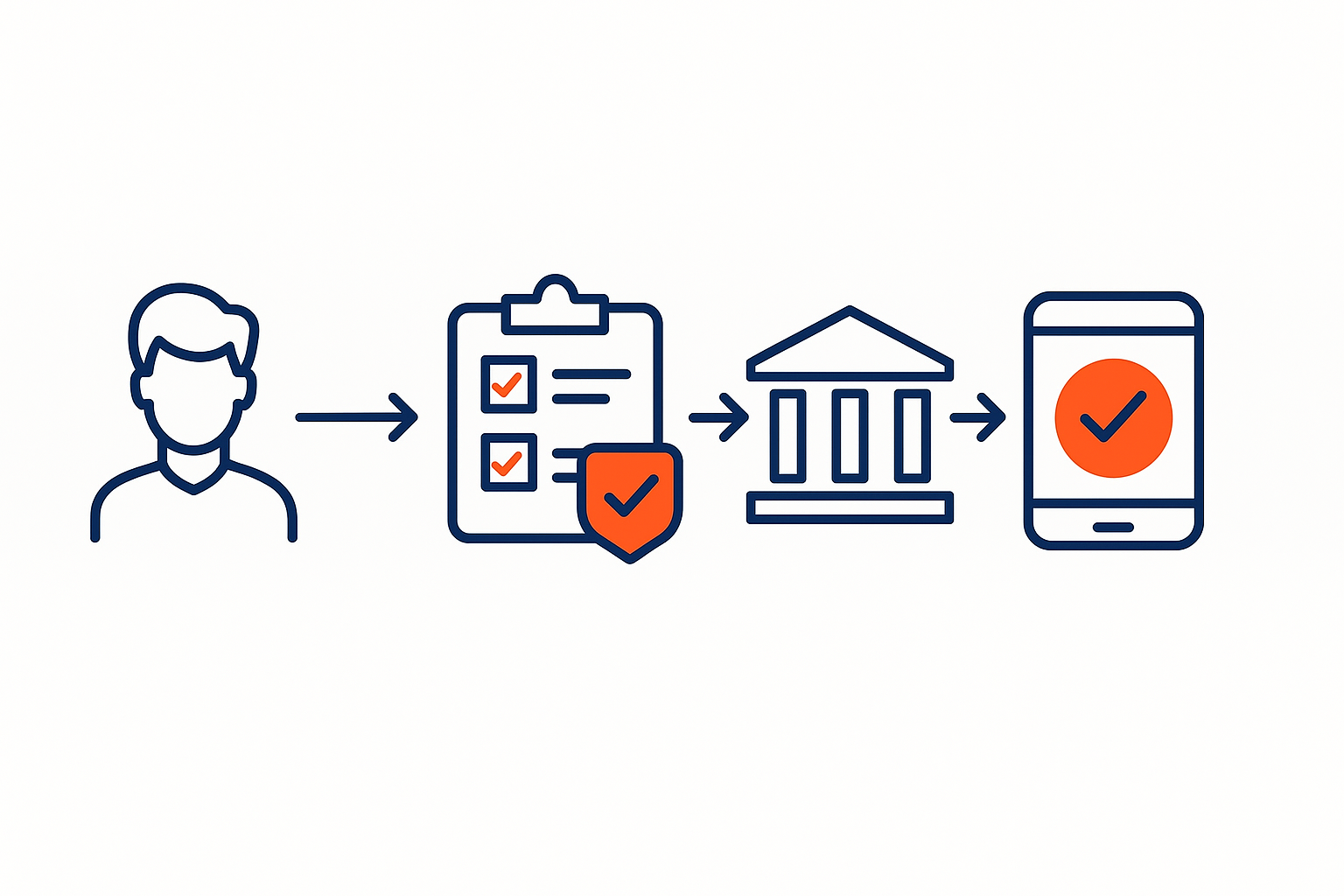
Buying and Selling Digital Assets
Clients can immediately buy digital assets after onboarding. Orders are triggered by bank transfers, eliminating direct debit risks. The order is typically triggered within minutes. Compliance and anti-money laundering mechanisms are built in, including limits and source of funds checks. Clients can settle crypto into their self-hosted wallet after buying. They can sell digital assets from their custodial account or deposit assets from their self-custody wallets for selling. Compliance measures, including the Travel Rule, apply to on-chain transactions. A post-trading report is delivered to the online banking inbox for each transaction. A transaction list is available in the white-label portal for accounting and tax purposes.
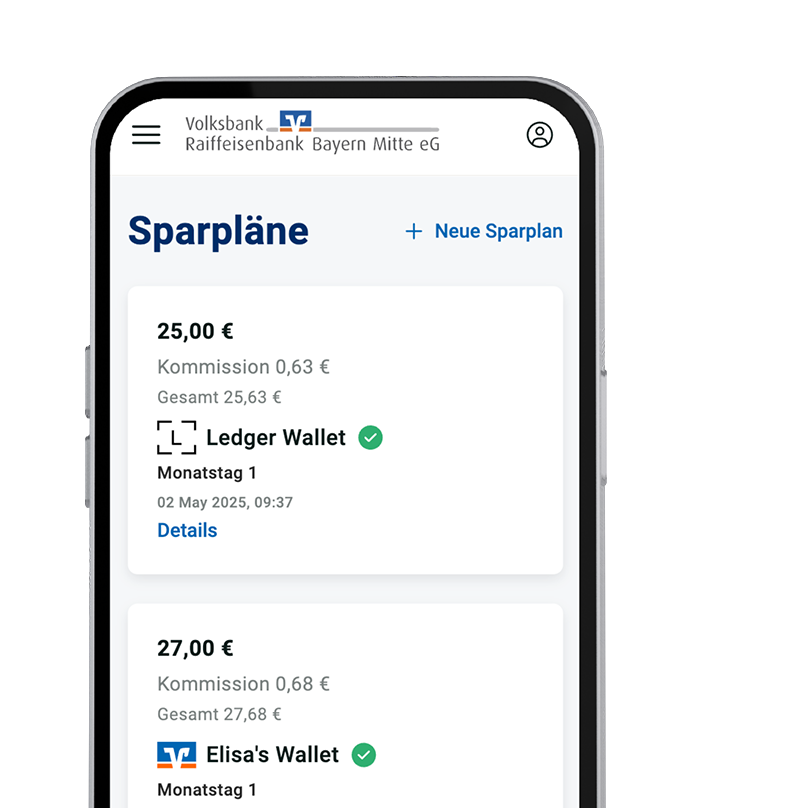
Saving plans
In addition to ad-hoc buying, clients can set up a recurring savings plan. Combined with standing orders that they create and manage directly in their online banking, it creates a powerful tool for continuous building of a digital assets portfolio.
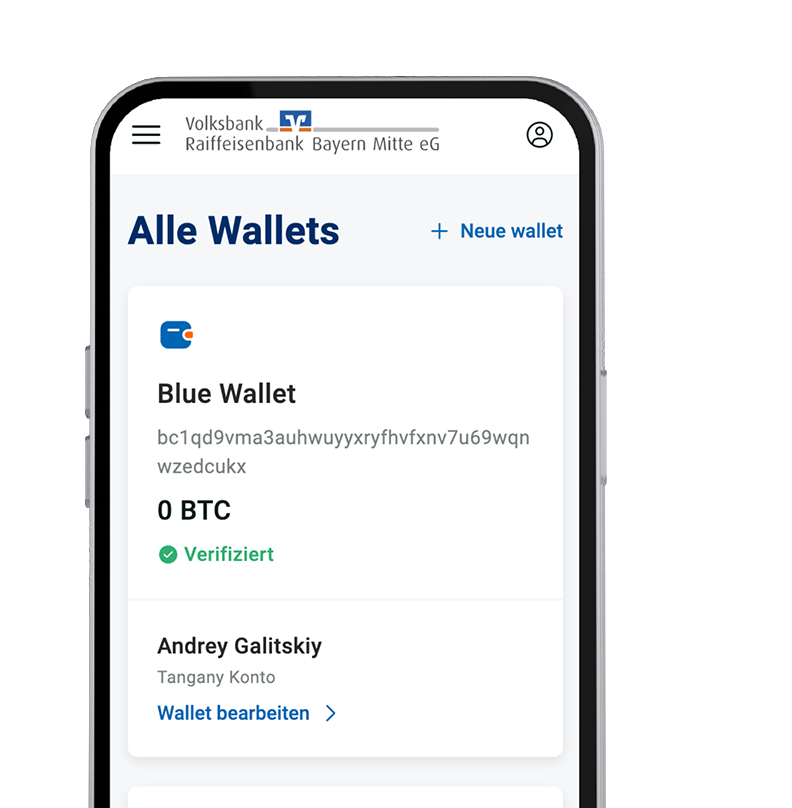
Wallets and custodial accounts
The ability to settle into a self-hosted wallet was mentioned in the Buying and selling section. The client can add and manage their wallets to the system. Once verified in accordance with the Travel Rule, a wallet can be used for the withdrawal or deposit of crypto. Another aspect of the solution is support for companies' and minors' accounts. A client can create and manage multiple accounts for legal entities and children.
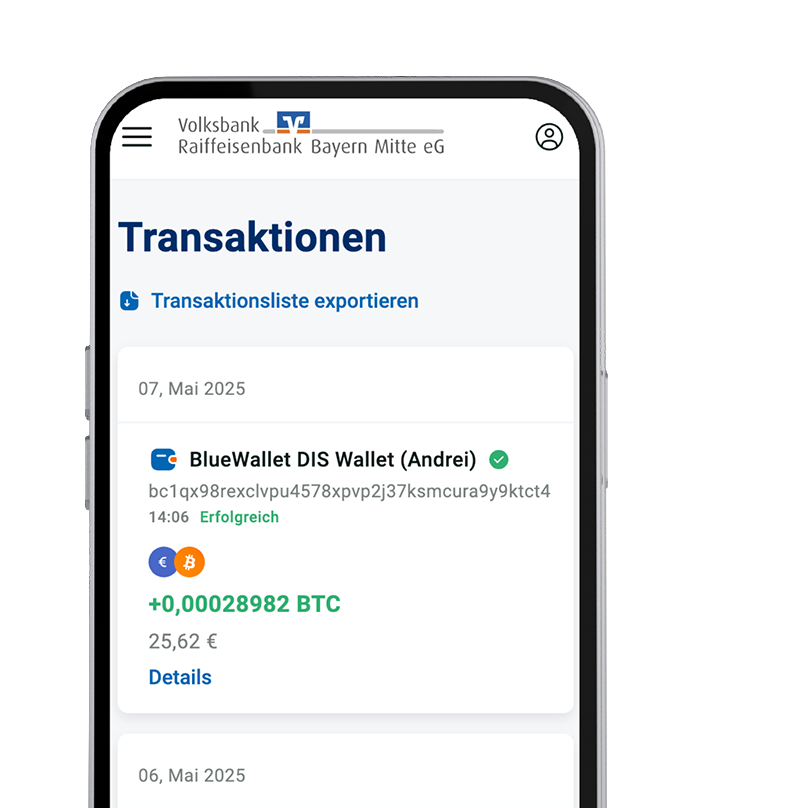
Transactions
In the transaction overview, your customers can view the transaction history and the current status of a transaction. It is also possible to export the transaction list as a .csv file, which can be used to create tax reports or other evaluations.
Order management & Settlement
The main component of the solution is the system that orchestrates and manages orders and settlement processes. It is probably best explained with the flow and the lifecycle of the 'buy' order (sell order is not that different conceptually). The order has the following phases: Entering order - the customer enters the order into the system; Confirming order - customers' funds arrive in a reference account; Execution of order - the system fills the order at the trading venue/liquidity provider; Settlement.

Entering order
This phase is all about the customer indicating and entering their wish to buy a digital asset. There are two important aspects here: showing a quote and performing limit checks. For each order, the system performs a request for quote on the trading venue and then adds a bank's commission. The bank commission can be flexibly configured on global and very granular levels.
Confirming order
The order is effectively confirmed when our system registers the corresponding bank transaction on the reference account. It usually takes no more than 2 minutes for the system to register an incoming bank transfer and execute the order on the trading venue. One important aspect of this design is that funds are secured on the reference account and are fully controlled by the bank before the actual trade occurs.
Executing & settling the order
Once funds are on the reference account, the system performs an actual trade. But before doing so, it once again checks all the compliance aspects and limits. Once an order is filled, the funds (both fiat and crypto) need to be settled. The fiat settlement is done daily via batch SEPA XML files. Settlement of the digital assets is done instantly within the custodial ledger.
Adviser dashboard
The adviser dashboard available to the bank team enables them to support their client, providing information about orders and managing limits. In essence, the tool has 3 modules: Order monitoring, Limit management, Account management.
Order monitoring
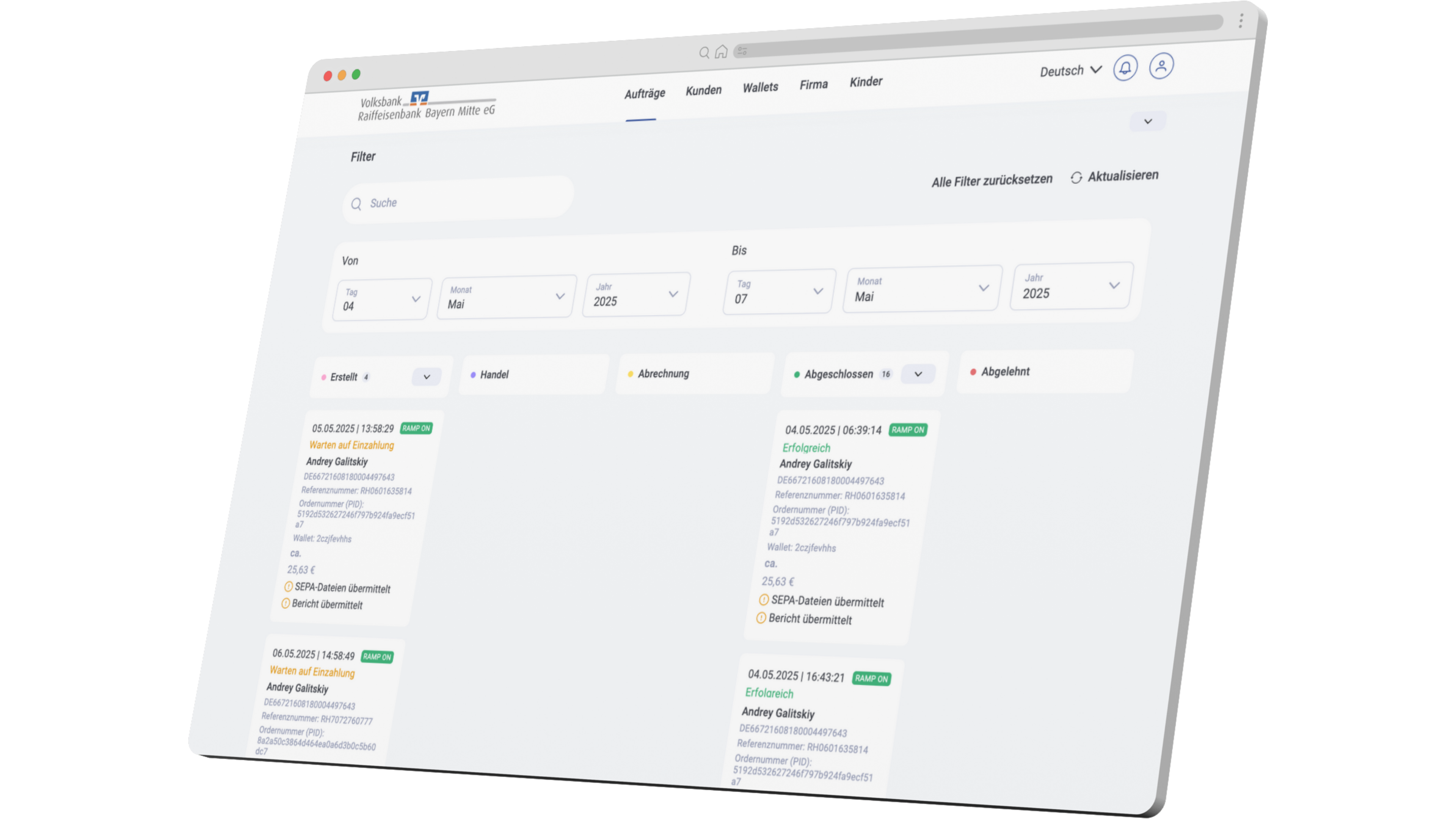
Designed as a simple Kanban board, the Order Monitoring shows all orders in their different stages. With search by name, IBAN, or order number, it gives a simple but powerful tool for the bank team to support their clients, provide accurate information, and service.
Limit management
With 10x higher average order volume in comparison to the industry average, managing limits is essential to the team. It provides a fundamental layer for compliance and, at the same time, gives flexibility to enable very high volume orders. In a nutshell, buying and selling limits can be set and revoked on the individual customer level.
Account management
As we have mentioned above, the solution supports accounts for legal entities and minors. In order to onboard companies and children in a regulatory compliant way, the KYB/KYC data must be verified. The account management tool does exactly that: the bank team can verify and confirm Company / Children accounts, keeping onboarding simple and compliant.